The Hidden Memory Layer Behind Long-Context AI
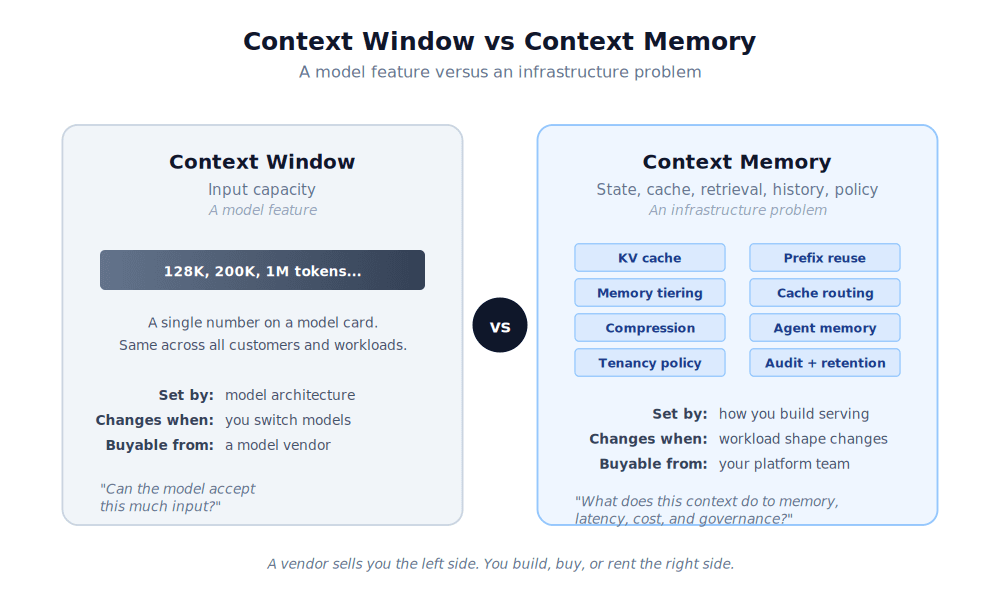
Why inference context memory, not GPU compute, is the next AI bottleneck. A practitioner's guide to the KV cache, prefix caching, memory tiers, and governance.

Why inference context memory, not GPU compute, is the next AI bottleneck. A practitioner's guide to the KV cache, prefix caching, memory tiers, and governance.

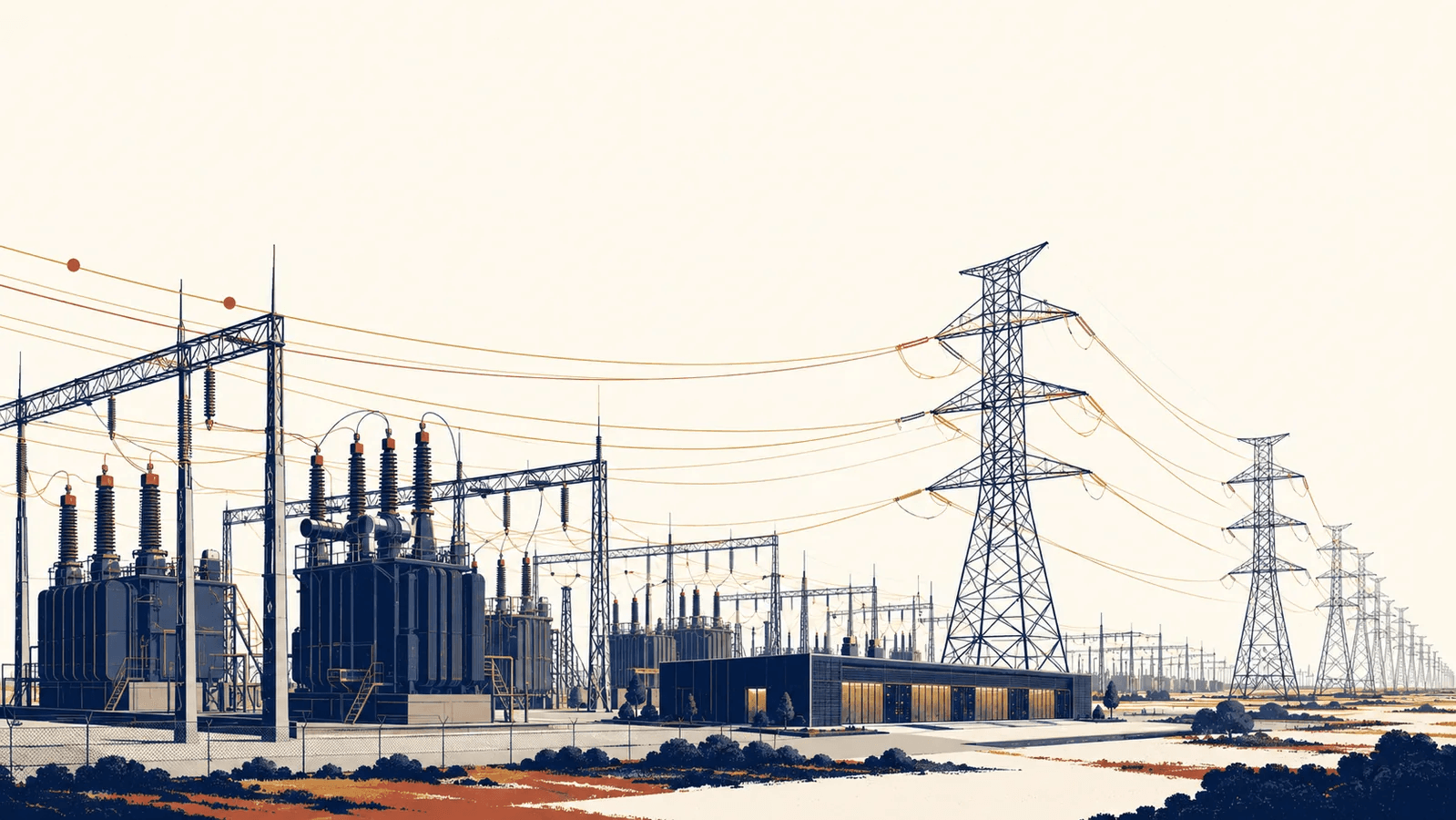
One gigawatt is a billion watts - the unit now defining AI data centers from Meta to OpenAI's Stargate, and why the world may need over 200 of them by 2030.
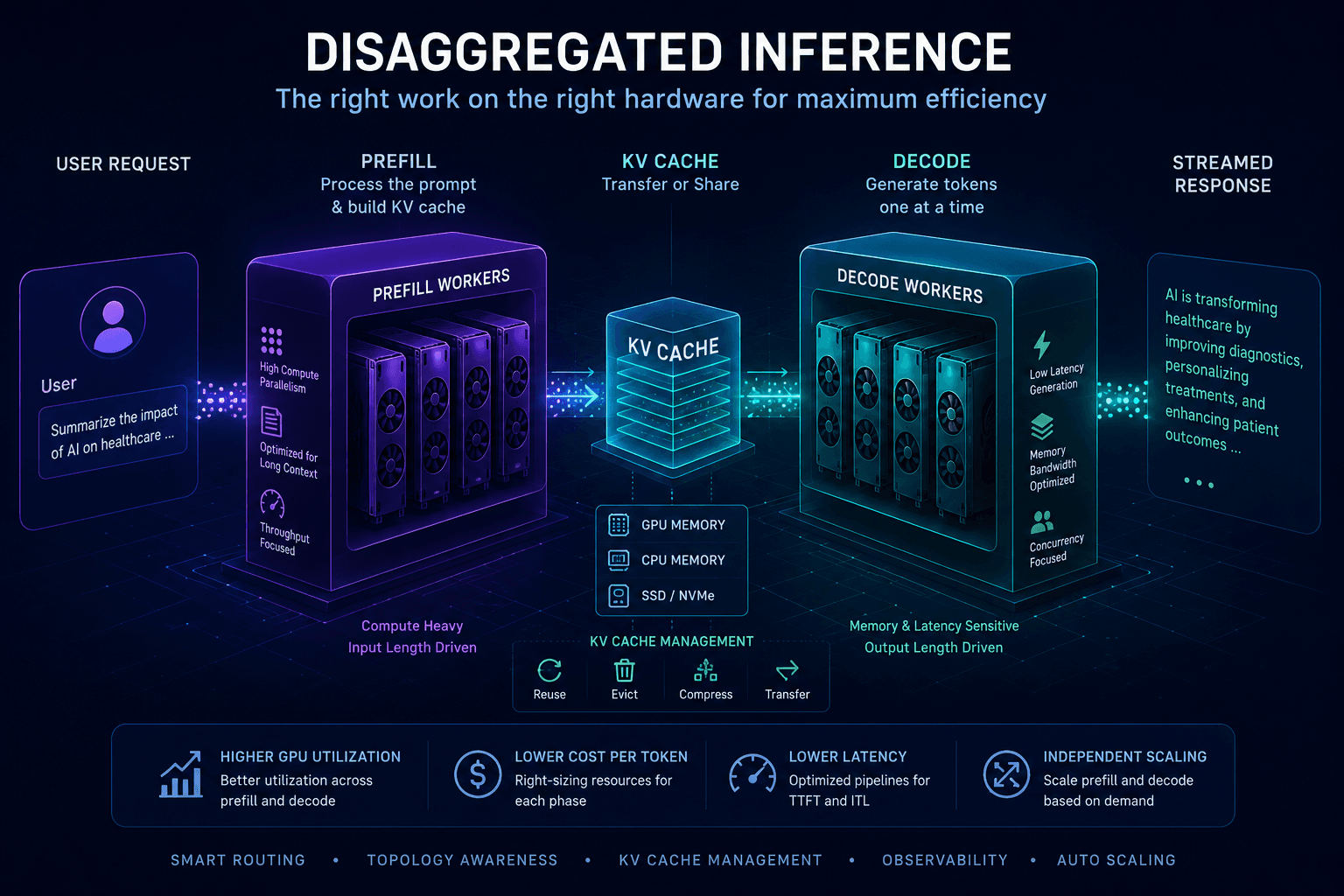
A primer on disaggregated inference: how separating prefill and decode reshapes LLM serving, why the KV cache matters, and when this architecture pays off.
Honest 2026 guide to US enterprise AI training across academic incumbents, skills platforms, and practitioners - how to choose by fit, not just brand prestige.
Most AI risk lives in vendor and SaaS tools you didn't build - manage it through procurement, vendor assessment, contracts, and ongoing monitoring controls.
ISO 42001 is the first AI management standard you can certify against - how auditing works, and how it complements NIST AI RMF and EU AI Act compliance.
Governing AI training data in practice - consent and legality, quality dimensions, sources of bias, and cross-border challenges, grounded in NIST and EU rules.
When to retire an AI system - regulatory shifts, performance decay, stakeholder opposition - plus a checklist for shutdown, transition, and notification.
A practitioner's walkthrough of the EU AI Act's four risk tiers, GPAI rules, and penalties up to 7% of global turnover - plus what the timeline means.
Policies without understanding produce compliance theater - how tiered AI literacy training, from board to staff, makes governance culture truly take root.
What model cards and dataset datasheets should document - intended use, limitations, metrics, ethics - and how to match documentation rigor to system risk.
When AI acts instead of advising, a governance failure becomes a bad outcome. Covers authority delegation, scope limits, oversight, and incident response.
How FTC Act Section 5 applies to AI - what makes a practice unfair or deceptive, enforcement actions, and emerging risks like AI-personalized dark patterns.
AI governance is an operating model, not a document - the roles, teams, and structure to scale oversight from 5 models to 500 without becoming a bottleneck.
A model can be 95% accurate overall yet 60% for one demographic - why testing needs the TEVV framework, disaggregated evaluation, and fairness analysis.
What Is AI Governance: AI systems are fundamentally different from traditional software — they are probabilistic, opaque, autonomous, and data-dependent.
How NIST AI RMF, ISO 42001, and the EU AI Act differ - voluntary framework, certifiable standard, and law - and why they complement rather than compete.
A practitioner's walkthrough of the NIST AI RMF's four functions - Govern, Map, Measure, Manage - and how to embed them in operations, not one-off compliance.
Match build-vs-buy and cloud-vs-edge decisions to risk using NIST AI RMF, the EU AI Act, and OECD principles - practitioner guidance for governance teams.
How GDPR and CCPA shape AI: notice requirements, lawful basis for training data, purpose limitation, and data minimization against AI's hunger for more data.
When AI causes harm, who is liable? How the EU AI Act splits obligations across providers, deployers, developers, and users - and why roles often overlap.
Data ownership, performance SLAs, IP licensing, and audit rights - the AI vendor contract terms governance teams should pin down before they sign a supplier.
Data drift, concept drift, and model drift all degrade AI in production. How teams catch decline early with segment metrics and decide when to retrain a model.
The five OECD AI principles - inclusive growth, human-centered fairness, transparency, robustness and safety, accountability - anchoring global AI governance.
AI governance spans the full lifecycle, not one pre-deployment gate. The policies, checkpoints, and owners needed from use case approval to decommissioning.
Banks and insurers must extend SR 11-7, OCC model risk rules, and fair lending duties to AI while preparing for the EU AI Act and DORA - a framework for both.
EU AI Act transparency by risk tier, user notice for chatbots and deepfakes, regulator documentation, and GPAI training-data summaries - what to disclose when.
Distinguishing explainability, interpretability, and transparency, why it matters for the EU AI Act, NIST's four principles, and interpretable models.
How product liability maps to AI: design defects from biased training, manufacturing defects from model drift, failure to warn, and strict liability vs fault.
Why brittleness, opacity, and cascading effects make AI incidents different from IT incidents, plus classification, detection, and containment options.
Compare privacy, algorithmic, and fundamental rights impact assessments for AI - when each type is required versus recommended, and how to conduct one.
A practitioner's taxonomy of AI risks organized by who gets harmed, how, and why - covering discrimination, privacy, manipulation, and physical safety risks.
A practitioner's guide to governing AI system design from use case to architecture, with feasibility, risk/benefit analysis, and knowing when not to build.
A release readiness checklist for moving AI from lab to production - validated performance, bias and fairness testing, security, and stakeholder sign-off.
How copyright applies to AI training data, the limits of fair use, key court cases, and the unsettled legal question of who owns AI-generated outputs.
Assess your AI governance against five maturity levels, from ad hoc experiments to metrics-driven management with continuous monitoring and improvement.
Six responsible AI principles meet reality: fairness tests via demographic parity and equalized odds, tooling like Fairlearn, and the tradeoffs teams resolve.
Function creep, dual-use repurposing, and cascading downstream harms - how to forecast the secondary AI risks that surface long after a system ships to users.
What to tell stakeholders about your AI before anything breaks: proactive disclosure under the EU AI Act, plus a crisis playbook for handling AI incidents.
Why engineering alone cannot govern AI as a socio-technical system, and who needs a seat - legal, compliance, privacy, security, HR, business, and design.
EU AI Act duties for high-risk systems: continuous risk management, data governance and bias checks, technical documentation, transparency, human oversight.
What counts as general-purpose AI under the EU AI Act, how GPAI models differ from systems, and the documentation and downstream duties every provider faces.
A practitioner's guide to IAPP's AIGP certification: who it suits, the four-domain body of knowledge, the 90-question exam, and how to prepare for it.
Internal, external, and algorithmic audits compared, plus red teaming - how mature programs separate the testing function from development for AI oversight.
How Title VII, the ADA, EEOC guidance, and ECOA apply to AI in hiring, promotion, credit scoring, housing, and insurance - with resume-screening bias examples.
How to translate AI policies into deployment - data governance in production, continuous risk monitoring, and user training for the people using the AI.

Existing laws already cover AI: Title VII, ADA, HIPAA, GLBA, FERPA, and CCPA all apply. 'The AI did it' is not a defense - your organization owns the outcome.

Why human oversight often fails as an AI safeguard - the UnitedHealth nH Predict case shows automation bias turning reviewers into rubber stamps, not controls.

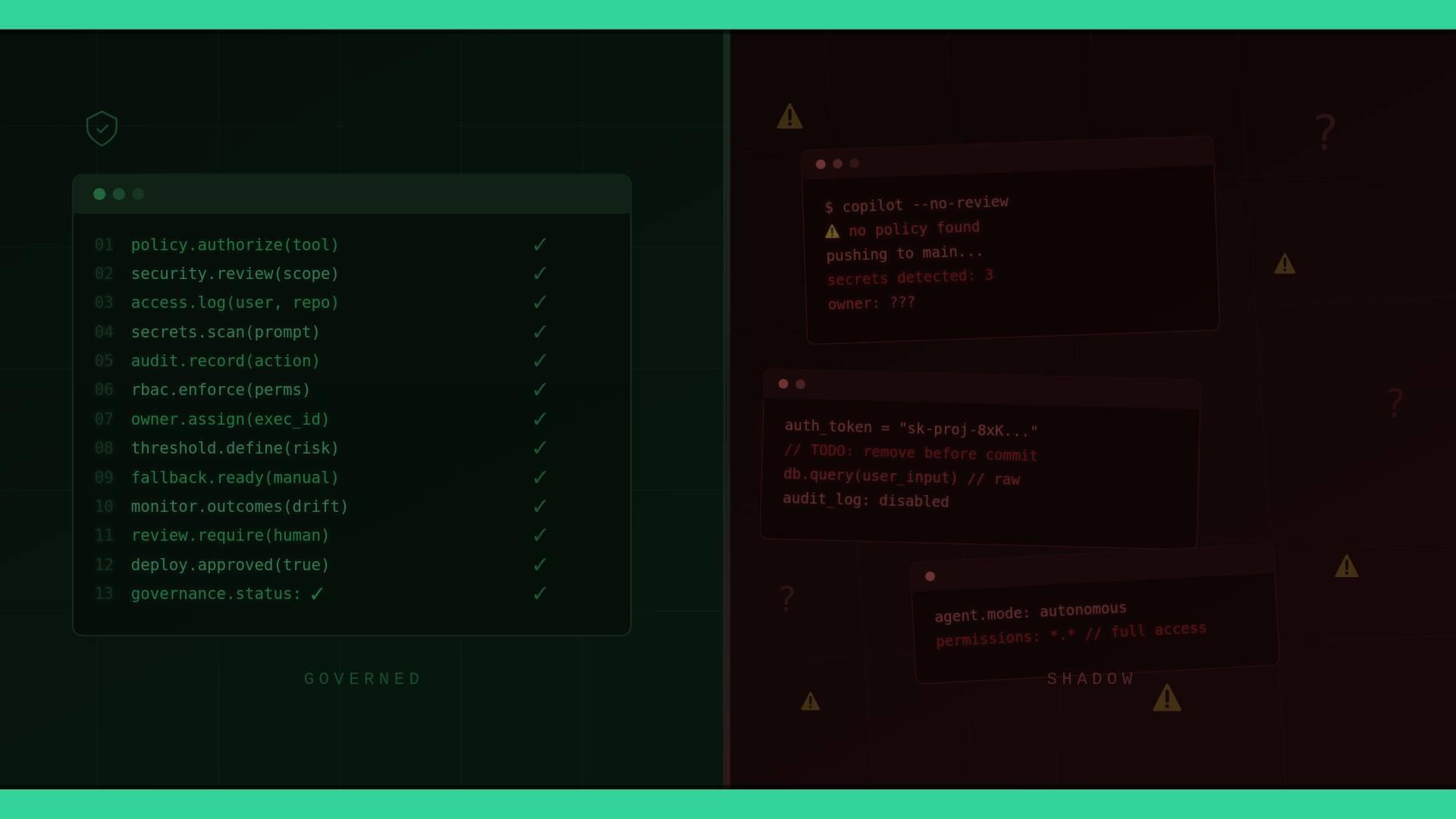
AI coding assistants spread before governance catches up - Copilot is in 90% of the Fortune 100, often via individual signups with no procurement or review.

Agentic assistants like OpenClaw hold OAuth keys to email, calendar, Slack, and CRM with no IT review - why this new category is a governance problem.

When an AI system goes wrong, who can turn it off? Why distributed ownership, undefined thresholds, and missing rollback runbooks turn shutdown into a meeting.

A chatbot meant to summarize policy made a decision, and a discrimination claim landed on the board. Why AI failures are governance failures, not tech defects.

The 2026 question isn't how to train people on AI but which roles should still exist - why mass reskilling fails and redesigning the work comes first.

AI projects fail because people kill them, not the technology - how backwards middle-manager incentives, silos, and broken trust sabotage adoption efforts.

Companies cutting middle managers to save millions are now slower, with nobody coordinating - why eliminating the layer and clinging to it both backfire.

Two of four AI Guru launches crushed it with the same team. How timing shaped outcomes, and why ShubhAI brings Vedic time windows into your workflow for free.

You can be right about AI and wrong about timing. Why the technology is real revenue today while valuations may price in a future three to five years away.

Gen Z uses AI 70% weekly yet shows just 50% expertise - learning to work through AI, not with it. Why the most connected generation is the least prepared.

Accenture's $865M restructuring, Salesforce cuts, and IBM's HR layoffs signal a shift. With OpenAI's GDPval, AI now matches experts on 47.6% of valuable tasks.

Why the AI gold rush rewards infrastructure, not apps - how OpenRouter routes calls to 400+ models for a 5% cut, and the lesson for founders and investors.

A plain-language AI and machine learning course built for people with no technical background, with a money-back guarantee, to share with someone who needs it.

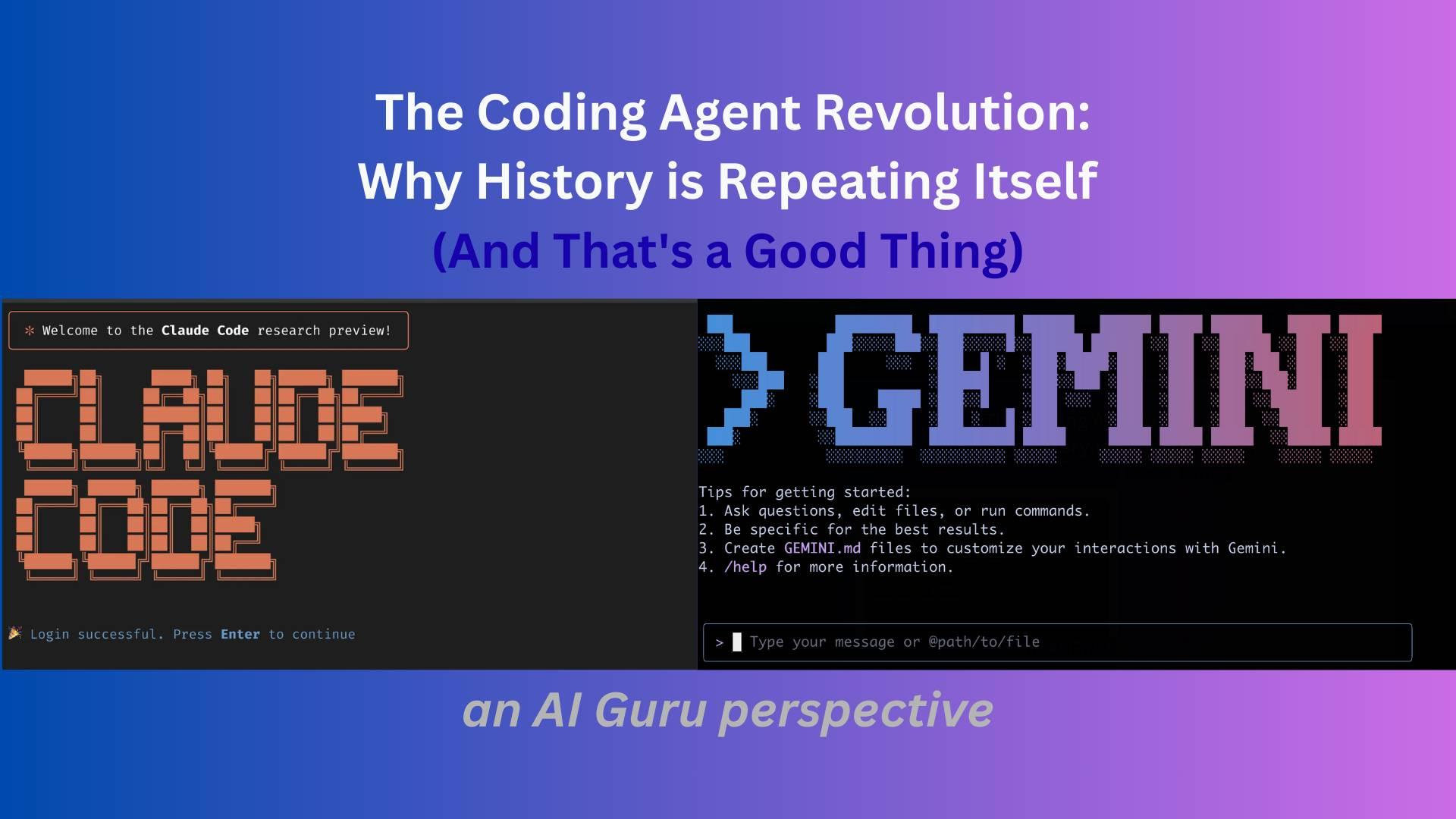
AI coding agents echo the 2006 cloud shift - 84% of developers now use AI tools, yet 46% distrust the output. A practitioner's take on Claude Code vs Gemini.

Plan turns weeks of strategic analysis into hours - 8 frameworks, 15+ AI agents, and live market data built to cut the busywork around real strategic thinking.

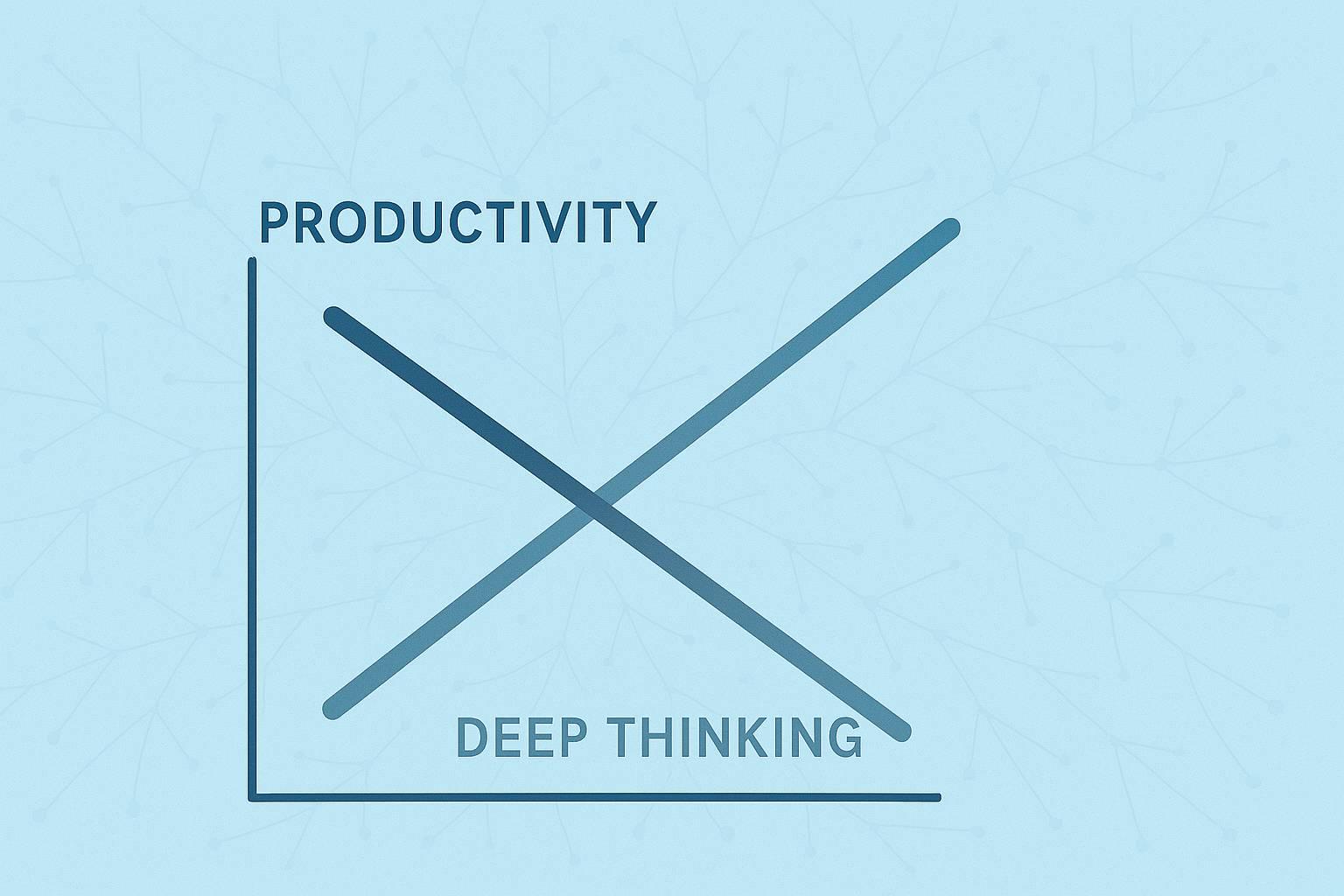
An MIT study found ChatGPT users showed 55% less neural connectivity and 83% could not recall their essays. What that paradox means for all of us using AI.

How a 7-day build produced DraftEmail, an AI tuned for professional email with a Chrome extension and templates - 500 beta users save 5+ hours a week.

Why 80% of AI projects fail comes down to five limitations leaders ignore, from the understanding illusion to poor data quality, not the technology itself.

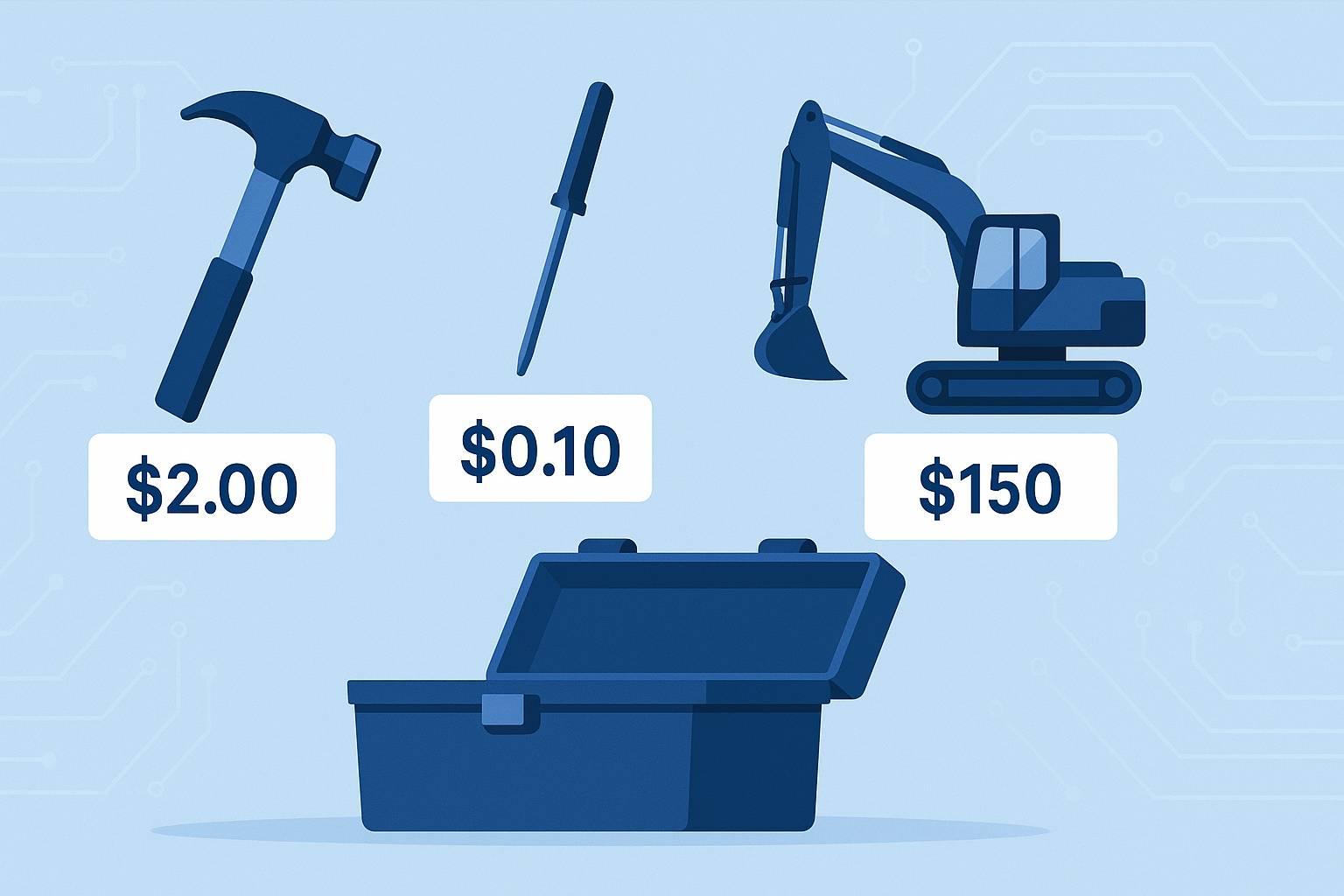
A Fortune 500 firm burned $2.3M assuming the priciest model wins. How to match AI models to tasks across powerhouse, balanced, and efficiency tiers for ROI.

Stakeholder conversations cause 75% of project failures. PM Coach lets you rehearse hostile sponsors and scope creep with AI, across three career tracks.

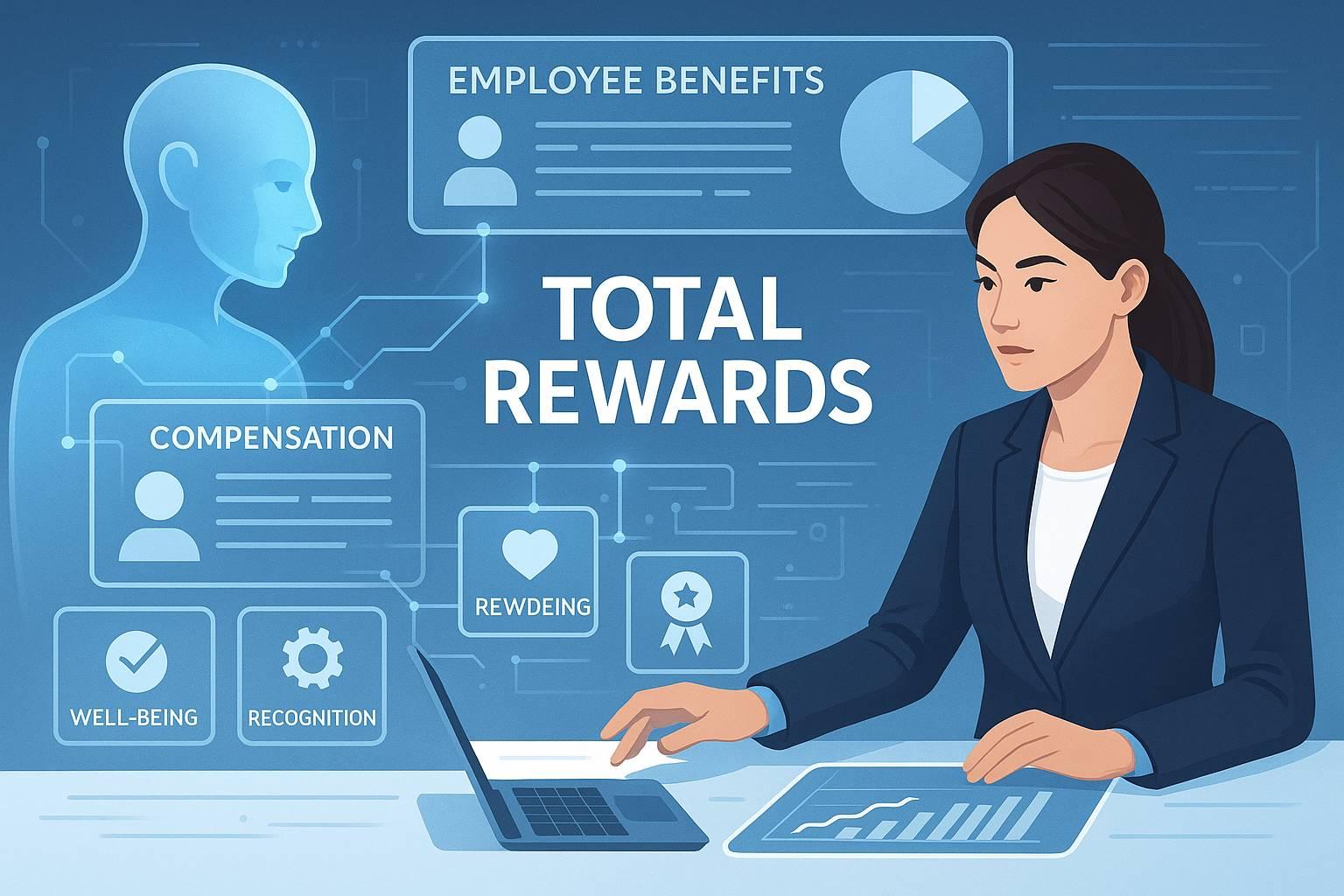
Fragmented data and one-size-fits-few programs leave Total Rewards underdelivering. How agentic AI unifies systems and personalizes rewards for HR leaders.

AI agents have moved from hype to high-stakes reality, with bets from OpenAI to Nvidia. How the hybrid workforce reshapes teams for leaders and investors.

Physicians spend 34-55% of their day on notes, costing $140B yearly. How ambient clinical documentation cuts that up to 70% and eases clinician burnout.

Enterprise AI agents now deliver 30-40% efficiency gains via multi-agent setups like Moody's 35 specialized agents, defense-in-depth controls, and oversight.

Three waves of sales AI from basic automation to integrated intelligence, with results like Clay's 312% response lift and Klarna scaling 700 agents of work.

Claude 3.5 Sonnet can now use computers and scores 49% on SWE-bench, Stable Diffusion 3.5 ships, and xAI opens its API. What each release means for your work.

Generative AI inference feels slow due to sequential token generation and memory bandwidth limits - even an H100 3.3 TB/s falls short of 1,000 tokens/sec.

How multisensory AI tailors learning to each student with video, audio, and interactive content, and grades work through speech, presentation, and feedback.

Meta's Llama 3.1 405B is the first open-source model rivaling GPT-4o and Claude 3.5, leading GSM8K math at 96.8, with 128K context across the upgraded family.

Remember when we thought AI was just about chatbots and funny image generators? I'm telling you, we're on the edge of an AI explosion. It's gonna be wild.

A prompt is the fundamental building block of generative AI - the context and instructions that guide a model's output. What prompts are and why they matter.

Generative AI is a double-edged sword for risk managers. How to capture gains like Klarna's two-thirds of support chats while safeguarding against its risks.

A career path for sales, marketing, finance, and HR professionals without an engineering degree who want to move into selling AI products and services.