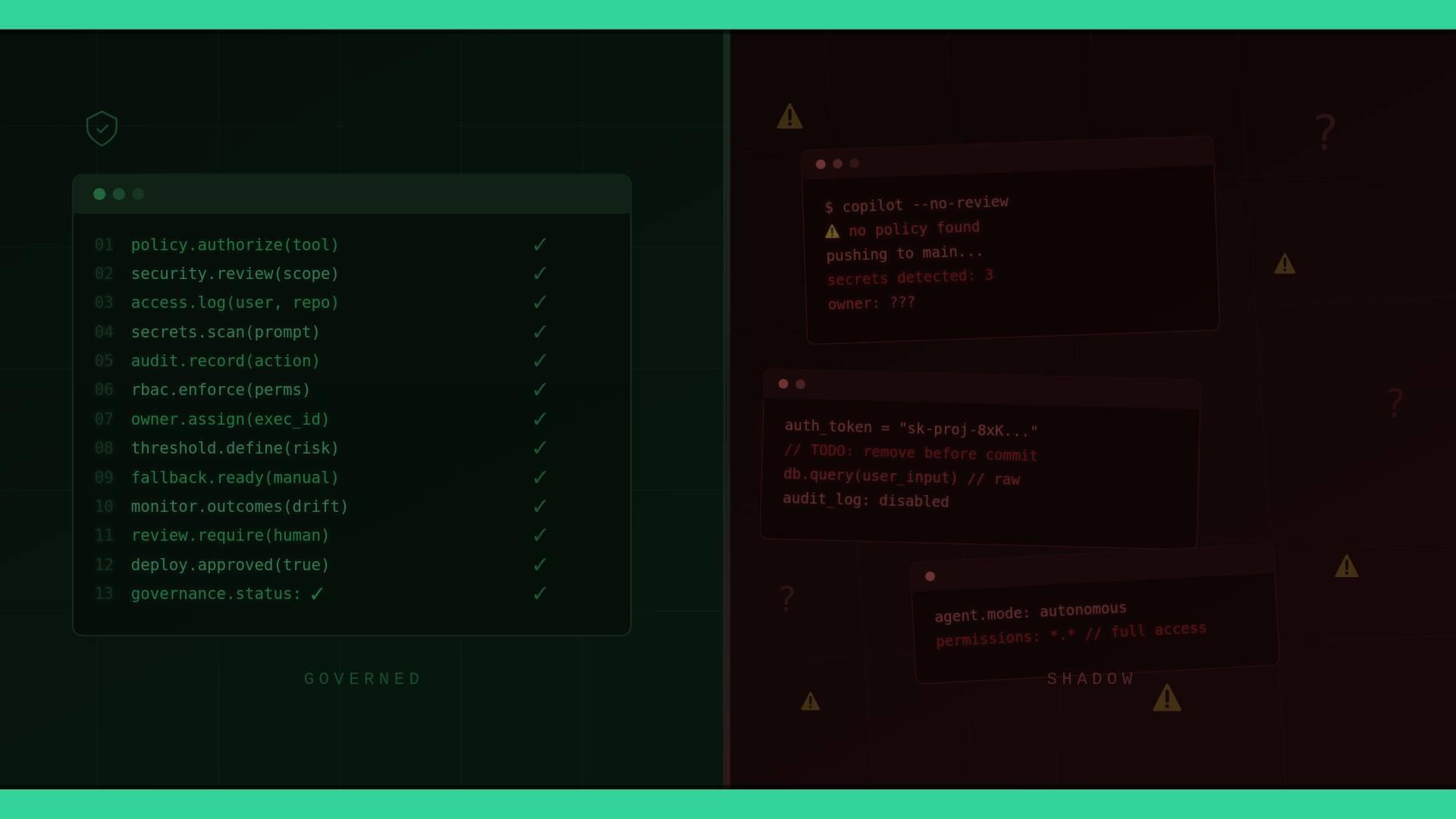
AI governance isn't a single gate that systems pass through before deployment. It's a continuous process that spans the entire lifecycle — from the moment someone proposes an AI use case to the day the system is decommissioned.
At each stage of the AI lifecycle, different governance questions arise, different stakeholders need to be involved, and different policies apply. Miss a stage, and you create a gap that downstream governance can't easily close.
This article walks through the complete AI lifecycle and maps out what policies, procedures, and checkpoints organizations need at every stage — from use case assessment through monitoring, incident management, and end-of-life.
Pre-Development Policies
In practice, this means use case assessment and approval: when ai is (and isn't) the right solution. Implementation requires clear ownership, defined timelines, and measurable success criteria. Governance activities without accountability tend to atrophy as competing priorities consume attention. Start with a pilot, measure results, and iterate. Governance practices that emerge from practical experience are more durable than those designed in a vacuum.
Risk management policies: risk appetite, assessment methodology, escalation. Mature governance programs embed this into standard operating procedures rather than treating it as a one-time compliance exercise. The organizations leading in this area have moved from reactive to proactive governance, addressing risks before they manifest in production. The practical implication is that risk assessment must be continuous, not a one-time pre-deployment exercise. Risks evolve as the system operates, as the data changes, and as the regulatory environment shifts.
The status quo — governing AI with existing IT frameworks — is no longer sufficient. ethics-by-design requirements: fairness, transparency, and accountability from day one. Advanced organizations should focus on integration and automation: connecting governance processes to CI/CD pipelines, automating monitoring and alerting, and building feedback loops between incident management and model development. Governance at scale requires tooling, not just process.
Data and Development Policies
Data acquisition, quality, and use policies. Mature governance programs embed this into standard operating procedures rather than treating it as a one-time compliance exercise. The organizations leading in this area have moved from reactive to proactive governance, addressing risks before they manifest in production. Organizations that invest in this capability early build a competitive advantage: they deploy AI faster, with more confidence, and with fewer costly surprises downstream.
The status quo — governing AI with existing IT frameworks — is no longer sufficient. model development standards: documentation, version control, reproducibility. Advanced organizations should focus on integration and automation: connecting governance processes to CI/CD pipelines, automating monitoring and alerting, and building feedback loops between incident management and model development. Governance at scale requires tooling, not just process.
How do you know if your AI system is treating people fairly? Training and testing requirements: bias testing, robustness, security. In practice, organizations that implement this systematically report fewer incidents, faster regulatory response times, and higher stakeholder confidence in their AI deployments.
Deployment and Monitoring Policies
The status quo — governing AI with existing IT frameworks — is no longer sufficient. deployment and release readiness checklists. Advanced organizations should focus on integration and automation: connecting governance processes to CI/CD pipelines, automating monitoring and alerting, and building feedback loops between incident management and model development. Governance at scale requires tooling, not just process.
How do you know if your AI system is treating people fairly? Monitoring requirements: performance, fairness, drift, incidents. In practice, organizations that implement this systematically report fewer incidents, faster regulatory response times, and higher stakeholder confidence in their AI deployments.
In practice, this means documentation and reporting obligations. Implementation requires clear ownership, defined timelines, and measurable success criteria. Governance activities without accountability tend to atrophy as competing priorities consume attention. Start with a pilot, measure results, and iterate. Governance practices that emerge from practical experience are more durable than those designed in a vacuum.
Cross-Cutting Policies
What risks are you not seeing? Third-party AI risk management: procurement, supply chain, acceptable use. In practice, organizations that implement this systematically report fewer incidents, faster regulatory response times, and higher stakeholder confidence in their AI deployments.
Organizations at every maturity level must address how to evaluate and update existing data privacy, security, and ip policies for ai. Implementation requires clear ownership, defined timelines, and measurable success criteria. Governance activities without accountability tend to atrophy as competing priorities consume attention. Start with a pilot, measure results, and iterate. Governance practices that emerge from practical experience are more durable than those designed in a vacuum.
Incident management: detection, containment, recovery, communication. Mature governance programs embed this into standard operating procedures rather than treating it as a one-time compliance exercise. The organizations leading in this area have moved from reactive to proactive governance, addressing risks before they manifest in production. Organizations that invest in this capability early build a competitive advantage: they deploy AI faster, with more confidence, and with fewer costly surprises downstream.
The status quo — governing AI with existing IT frameworks — is no longer sufficient. decommissioning policies: when and how to shut down an ai system. Advanced organizations should focus on integration and automation: connecting governance processes to CI/CD pipelines, automating monitoring and alerting, and building feedback loops between incident management and model development. Governance at scale requires tooling, not just process.
What to Do Next
- Assess your organization's current practices against the key areas covered in this article and identify the top three gaps
- Assign clear ownership for each governance activity discussed — accountability without a named owner is just aspiration
- Establish a regular review cadence (quarterly at minimum) to evaluate whether governance practices are keeping pace with AI deployment
- Connect governance processes to your existing enterprise risk management framework rather than building a parallel structure
- Invest in governance tooling and automation — manual governance processes break down as the AI portfolio scales
This article is part of AI Guru's AI Governance series. For more practitioner-focused guidance on AI governance, risk management, and compliance, explore goaiguru.com/insights.